



Carbon fiber materials: Initiating an industrial revolution that integrates lightweight and high performance
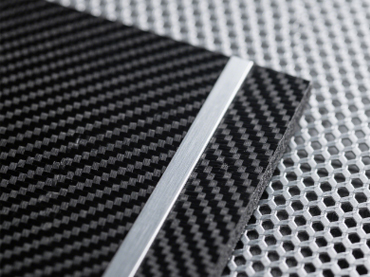
In the vast starry sky of materials science, carbon fiber is reshaping the genes of modern industry in an epoch-making manner. This fibrous material composed of carbon elements, with its strength surpassing that of metals, density approaching that of plastics, and outstanding properties of high-temperature resistance and corrosion resistance, is triggering a silent industrial revolution in fields such as aerospace, new energy, and high-end equipment. From rocket engine casings to battery boxes of new energy vehicles, from the shells of deep-sea probes to smart wearable devices, every breakthrough in the application of carbon fiber is redefining human understanding of the limits of materials.
I. Performance Leaps in the Aerospace Field
In the field of satellite manufacturing, carbon fiber composite materials have demonstrated the potential to change the game. The directional antenna deployment arm of a certain type of satellite in our country is made of carbon fiber reinforced composite material, with a total weight of only over 500 grams, which is nearly 300 grams lighter than that of aluminum alloy material, yet it can withstand a static load of 9 tons. The dimensional stability of this material is particularly outstanding in extreme temperature environments. The deformation of the connection bracket of a certain type of Earth observation satellite is less than 0.1 millimeters in a temperature difference of -180℃ to 150℃, ensuring the precise alignment of precision instruments. What is even more remarkable is the manufacturing breakthrough of a certain type of solid rocket engine housing. Its pressure-bearing strength has reached 2,630 megapascals, which is equivalent to requiring a force of 5.2 tons to break a fiber with a diameter of 1 millimeter. This performance has enabled the weight reduction ratio of the rocket engine to exceed 40%, and the carrying efficiency has been qualitatively improved.
In the field of deep space exploration, the main load-bearing structure of a certain type of Mars probe adopts carbon fiber reinforced epoxy-based shape memory polymer composite materials, which can still maintain an elastic modulus of more than 30% in the Martian surface environment of -130℃. This smart material can independently deform and unfold solar panels when heated, and return to its original shape after cooling, significantly reducing the complexity of mechanical transmission mechanisms. The hub system of a certain type of lunar rover integrates 12 traditional metal components into a single structure through carbon fiber three-dimensional weaving technology. This not only reduces the weight but also enhances the impact resistance by 200%.
Ii. Material Innovation in the New Energy Industry
The new energy vehicle sector is undergoing a lightweight revolution triggered by carbon fiber. The battery box of a certain type of pure electric car is made of carbon fiber reinforced thermoplastic composite material. Under the premise of maintaining a bending strength of 150MPa, the weight is reduced from 120 kilograms of traditional steel to 38 kilograms. A more revolutionary application has emerged in the hydrogen storage system of a certain type of hydrogen fuel cell bus. The 70MPa high-pressure hydrogen storage cylinder adopts carbon fiber winding technology, with a hydrogen storage density of 5.7wt%, which is 60% higher than the traditional 35MPa system, and the driving range has exceeded 800 kilometers. In the field of charging facilities, the heat dissipation module of a certain type of ultra-fast charging pile adopts carbon fiber reinforced liquid cooling pipes. Under the condition of a large current of 1000A, the heat dissipation efficiency can be increased by 40% and the equipment volume can be reduced by 60%.
The wind power industry is also presented with an opportunity for material upgrading. The blades of a certain type of 10MW offshore wind turbine are made of carbon fiber reinforced epoxy resin composite material. While maintaining a length of 68 meters, their weight is reduced by 32% compared to glass fiber blades, and their fatigue resistance is enhanced by five times. What is more worthy of attention is the anchor chain system of a certain type of floating wind power platform, which uses carbon fiber - polyethylene composite cables. It can still maintain 95% of its initial strength in a deep-sea environment at a depth of 3,000 meters, completely solving the corrosion problem of traditional steel cables.
Iii. Empowering Breakthroughs in Intelligent Manufacturing
The combination of 3D printing technology and carbon fiber is reshaping the manufacturing paradigm. The frame of a certain type of unmanned aerial vehicle (UAV) adopts a selective laser sintering process to directly print carbon fiber reinforced nylon powder into a complex honeycomb structure, achieving a 30% weight reduction while ensuring a tensile strength of 200MPa. A more cutting-edge exploration emerged in the manufacturing of a certain type of satellite structural component. By using 3D printing technology with continuous carbon fiber reinforced PEEK material, a fairing with a diameter of 2.5 meters was successfully fabricated, reducing the production cycle from six months in the traditional process to three weeks. In the medical field, a certain type of orthopedic implant uses carbon fiber reinforced polyetheretherketone composite materials. Through 3D printing, a personalized trabecular bone structure is achieved, and the speed of bone integration after implantation is increased by 40%.
The breakthrough in nanotechnology has injected new vitality into carbon fiber. A nanoscale groove structure was constructed on the surface of a certain type of carbon fiber through plasma etching technology, and the interfacial shear strength with epoxy resin was increased to 85MPa, which was 60% higher than that of the traditional treatment process. Even more exciting is the research and development of graphene-carbon fiber multi-scale reinforcements. In a certain type of missile shell material, the carbon fiber composite material with 0.5wt% graphene added has a thermal conductivity exceeding 200W/(m·K), while maintaining a tensile strength of 550MPa, providing a brand-new solution for the thermal protection of hypersonic vehicles.
Iv. Material Solutions for Circular Economy
In the field of sustainable development, a certain type of dynamic cross-linked carbon fiber composite material has achieved true closed-loop recycling. By introducing reversible chemical bonds into the polymer matrix, a certain type of automotive parts can be completely de-crosslinked at 180℃. The length retention rate of the separated carbon fibers exceeds 90%, and the mechanical properties of the recycled material reach 85% of those of the primary material. A more innovative application has emerged in the reinforcement field of a certain type of building. Carbon fiber cloth made of degradable epoxy resin can be chemically recycled to obtain carbon fiber with a purity of 98% after completing a 10-year service life, which can be reused to manufacture the main beam structure of a certain type of wind turbine blade.
A certain type of thermoplastic carbon fiber composite material is changing the life cycle of consumer electronic products. The casing of a certain type of notebook computer is made of this material. After being discarded, it can be reshaped through infrared heating and transformed into the leading edge component of a certain type of unmanned aerial vehicle wing. This material can still maintain 80% of its initial strength after five recycling cycles, completely overturning the traditional industrial logic of "single-use" composite materials.
Looking back from the forefront of materials science, every breakthrough in the one-time performance of carbon fiber has expanded the boundaries of human cognition. From the deep sea to space, from the microscopic nanometer to the macroscopic structure, this black gold is writing a material legend belonging to this era. When a certain type of carbon fiber reinforced ceramic matrix composite material withstands the test of 3000℃ high temperature on a certain hypersonic aircraft, and when a certain type of bio-based carbon fiber achieves perfect integration with human tissues in a certain type of artificial joint, what we see is not only a breakthrough in material performance, but also humanity's unremitting pursuit of the limit. In this silent industrial revolution, carbon fiber is weaving the warp and weft of future industry with its unique fiber structure.