



Carbon fiber sheet: Many advantages, but also quite a few disadvantages?
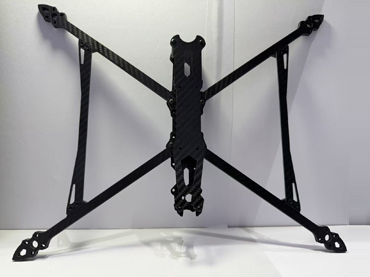
Carbon fiber sheet
Before formally discussing the advantages and disadvantages, we first need to understand exactly what carbon fiber plates are. In simple terms, carbon fiber sheet is a high-performance sheet made by combining carbon fiber as the main reinforcing material with resin and other matrix materials. For instance, if carbon fiber is compared to steel bars, then resin is like concrete. When the two are combined, they become a strong and durable "super material".
Carbon fiber is a new type of fiber material with a carbon content of over 95%, featuring high strength and high modulus. It is composed of organic fibers such as flake graphite microcrystals piled up along the axial direction of the fibers. After a series of complex carbonization and graphitization treatments, this magical material, which is as fine as a human hair but has a strength far exceeding that of steel, is ultimately obtained. Imagine these tiny carbon fiber filaments, just like super "golden hoop rods", though slender, they contain tremendous energy.
When making carbon fiber plates, the carbon fibers are usually first made into carbon fiber cloth or carbon fiber felt and other forms, and then thoroughly mixed with resin. This mixing process is just like when we knead dough in our daily life. We need to ensure that the carbon fibers and resins are evenly fused together. Subsequently, through processes such as hot pressing, molding or vacuum-assisted forming, they are solidified and formed under certain temperatures and pressures, and ultimately carbon fiber plates of various specifications and properties are obtained. Different manufacturing processes and formulas can cause significant differences in the performance of carbon fiber plates. Just like the same flour, the steamed buns and noodles made from it can have very different tastes and uses.
Unveiling the Advantages of Carbon Fiber Sheets
1. Super lightweight, a little weight loss expert
The density of carbon fiber plates is extremely low, usually only about a quarter of that of steel. Just for this reason, it is highly sought after in many
industries that have strict requirements for weight. For instance, in the aerospace field, if more carbon fiber plates are used on aircraft, the weight of the fuselage can be significantly reduced. What does this mean? This means that aircraft can consume less fuel, improve fuel efficiency and have a longer range. Take aircraft manufacturers like Boeing and Airbus for example. In the design and manufacture of new aircraft, they have extensively adopted carbon fiber composite materials, significantly enhancing the performance of the aircraft.
The same is true in the automotive industry. The use of carbon fiber plates in car manufacturing can significantly reduce the weight of the vehicle body, improve acceleration performance and handling, and also lower energy consumption. It is both environmentally friendly and economical. Like some supercars and high-end vehicles, in pursuit of ultimate performance, carbon fiber plates are used in the body parts, which not only make them faster but also more fuel-efficient.
2. Ultra-high strength and ultra-reliable
Don't be fooled by the light and airy appearance of carbon fiber sheets. Their tensile strength is astonishingly high, several times that of steel. This means it can withstand greater loads, and its safety and durability are top-notch. In the field of sports equipment, such as high-end bicycle frames, tennis rackets, golf clubs, etc., the use of carbon fiber plates can lead to a qualitative leap in both strength and performance. Take carbon fiber bicycles for example. They are not only lightweight and portable, but also very sturdy, making it easier and safer to ride.
Carbon fiber plates also have extensive applications in high-performance mechanical equipment. For some components of precision instruments, carbon fiber plates are used to make them, which can ensure the stability and reliability of the equipment under high-speed operation and high-load work, and greatly extend the service life of the equipment.
3. Strong corrosion resistance and long service life
Carbon fiber materials are inherently resistant to erosion by chemical substances and environmental factors, and their corrosion resistance is simply amazing. Compared with metallic materials, it performs quite well in damp, high-temperature or chemically corrosive environments. In the chemical industry, many reaction vessels and pipelines come into contact with various highly corrosive chemicals. Using carbon fiber plates for production can significantly extend the service life of equipment, reduce maintenance costs and replacement frequency.
In Marine environments, metal materials are prone to corrosion by seawater, but carbon fiber plates do not have to worry about this problem at all. Some offshore wind power generation equipment, ships, etc. use carbon fiber composite materials to make components, which can operate stably in harsh Marine environments and enhance the reliability and safety of the equipment.
4. Good elasticity and toughness, extremely reliable
Carbon fiber plates have excellent elasticity and toughness. Even under extreme conditions, they can maintain their shape and performance and will not deform or be damaged easily. This greatly enhances reliability in some high-intensity applications. For instance, in the case of racing cars, during high-speed driving, they are subject to various intense impacts and vibrations. If the frame of a racing car is made of carbon fiber plates, it can effectively resist these high-frequency vibrations and impacts, ensuring the stability and safety of the racing car.
The same is true in aircraft design. During flight, the fuselage of an aircraft is subjected to various complex forces. The excellent elasticity and toughness of carbon fiber plates enable the aircraft to maintain good performance under all kinds of harsh conditions, ensuring flight safety.
5. The design is super flexible and highly personalized
Carbon fiber materials have particularly strong plasticity and can meet various complex design requirements, being made into components of various shapes and sizes. In industrial design, designers can fully exert their creativity and use carbon fiber plates to design unique products. For instance, the casings of some high-end electronic products are made of carbon fiber plates, which not only have high strength and light weight, but also can be designed with a very fashionable appearance.
In terms of customized products, carbon fiber plates have incomparable advantages. For instance, for some high-end furniture customization, customers can customize unique carbon fiber furniture based on their own preferences and space requirements, which is both aesthetically pleasing and practical.
The disadvantages of carbon fiber plates also need to be considered
The cost is too high for the wallet to bear
The cost of carbon fiber plates is really extremely high, mainly because its manufacturing process is simply too complicated. Take the preparation of carbon fiber precursor as an example. It has to go through a series of complex processes such as pre-oxidation, carbonization, graphitization and sizing, and each step requires high-precision control and a large amount of energy consumption. Moreover, high-quality carbon fiber raw materials are inherently expensive. For commonly used raw materials like polyacrylonitrile (PAN), their prices are greatly influenced by the supply and demand relationship in the international market. This leads to the high cost of carbon fiber plates. Compared with traditional materials, they are not just a little more expensive.
Such a high cost restricts the use of carbon fiber plates in some low-cost application fields. For instance, in the manufacturing of some daily consumer goods that are sensitive to costs, it is difficult to use carbon fiber plates on a large scale. Even in industries such as aerospace and automotive manufacturing, which have high requirements for material performance, the high cost has also restricted the application scale of carbon fiber plates to a certain extent. After all, if the cost is too high, the profit margin of enterprises will be compressed.
2. The production technology has high requirements and is highly challenging
To produce carbon fiber plates, professional technology and equipment are indispensable. From the processing of raw materials to the forming and post-treatment of plates, every step requires strict control of parameters such as temperature, pressure and time. Take the hot-pressing forming process as an example. If the temperature and pressure are not well controlled, it will affect the quality and performance of the sheet. Moreover, the production process also has very high requirements for the environment, and it is necessary to maintain the cleanliness and stability of the production environment.
This is simply an insurmountable threshold for some small enterprises. The purchase of professional equipment requires a large amount of capital investment, and the cultivation of professional technical talents also incurs considerable costs. Coupled with the high standards for the production environment, many small enterprises are simply unable to enter this field, which restricts the competition and development of the industry.
3. Brittleness issue: Use with care
Although carbon fiber materials have high strength, their toughness is relatively low, which makes them prone to breakage under overload or impact. For instance, in some sports equipment, if athletes use them improperly or they are subjected to accidental impacts, carbon fiber materials may break. Like carbon fiber tennis rackets, if you hit the ball too hard or accidentally bump into a hard object, they are prone to breaking.
In some application scenarios with very high security requirements, this brittleness issue becomes particularly prominent. Therefore, in many cases, it is necessary to combine other materials to enhance the toughness of carbon fiber plates, such as adding toughening agents to the resin matrix or using them in combination with other materials with better toughness. This undoubtedly increases the design and manufacturing costs of the products.
4. It is difficult to recycle and dispose of and is not environmentally friendly
At present, the recycling technology for carbon fiber materials is not yet very mature. The existing recycling methods are not only inefficient but also extremely costly. After carbon fiber plates are used, they are difficult to be effectively recycled and reused like metal materials. Most carbon fiber waste can only be landfilled or incinerated, which not only wastes resources but also exerts great pressure on the environment.
With the continuous improvement of people's environmental awareness, the requirements for the sustainability of materials are also getting higher and higher. Under such a macro environment, the difficulty in recycling and disposing of carbon fiber plates has become a significant obstacle to their large-scale application in the future.
5. Poor thermal conductivity, with limitations
The thermal conductivity of carbon fiber plates is not very good, which makes them somewhat inadequate in some application scenarios that require excellent thermal conductivity. For instance, in terms of heat dissipation for electronic components, electronic devices generate a large amount of heat during operation. If the heat cannot be dissipated in a timely and effective manner, it will affect the performance and lifespan of the equipment.
Carbon fiber plates, due to their poor thermal conductivity, cannot quickly conduct heat away, and thus are not very suitable for heat dissipation of electronic components. In contrast, metallic materials such as copper and aluminum have excellent thermal conductivity and are more suitable for heat dissipation and thermal management of electronic components.
Future Outlook: The development potential of carbon fiber sheets
Although carbon fiber plates still have many drawbacks at present, technology is constantly advancing and the future is promising. Take the cost issue for example. With the continuous innovation of production technology and the emergence of scale effects, the cost of carbon fiber plates is very likely to come down. Some new carbon fiber preparation technologies are under development. Maybe in the future, production costs can be significantly reduced, allowing carbon fiber sheets to enter more industries and fields.
In terms of recycling technology, many researchers are also making efforts. It is believed that in the near future, more efficient and low-cost recycling methods will emerge to solve the problem of difficult recycling and disposal of carbon fiber plates, making them more environmentally friendly and sustainable.
By that time, carbon fiber plates, with their outstanding performance, will surely play a significant role in more fields and bring more surprises and changes to our lives. Perhaps in the future, carbon fiber plates can be used in our daily necessities. Just thinking about it makes one look forward to it!
In the future, as these problems are gradually resolved, carbon fiber plates will embrace a broader space for development and completely transform our perception of material applications. From aerospace to daily necessities, carbon fiber sheets are moving from high-end niche to mass popularization. Its transformative power will reshape the landscape of the materials world and usher in a brand-new era of high-performance materials. Let's look forward together and witness carbon fiber plates breaking through numerous obstacles and shining brightly in various fields with a brand-new posture, bringing more unimaginable convenience and innovation to human life.
Previous:
This is the firstNext:
Carbon fiber materials: Initiating an industrial revolution that integrates lightweight and high performance